
18 March 2026 · 8 min
Heritage
On the meaning of oxblood
From Mughal miniatures to the modern barat, an account of the colour the South Asian bride has chosen for centuries.
The first bridal colour was not red. The Mughal miniatures of the seventeenth century show brides in deep green, in saffron, in indigo, and only occasionally in red. Red, as the dominant bridal colour, is a Punjab inheritance — and a Punjab one specifically. It travelled south and east through the twentieth century and ended up everywhere.
What we mean when we say oxblood
The colour we use most often at the atelier is not the bright red of a paan-stained smile. It is closer to the inside of a pomegranate after it has been opened and left for a few hours. Oxblood has more brown than the typical bridal red, less orange, and considerably less sheen. Under candlelight it reads as black until the bride moves and the warp catches.
We arrived at the shade by accident. The first bolt of raw silk we ordered for the Mehrunisa season came back darker than the reference card. We almost returned it. By the time the return paperwork was filed, the karigar had already started threading the adda. We left it alone. It became the season's colour.
The barat
A barat is the bridegroom's procession. The bride is meant to arrive separately, but on the day, the colours are always in dialogue. If the groom is in ivory, the bride will be in oxblood. If the groom is in midnight blue, the bride will be in maroon. The colours are paired, even when the couple has not discussed it. The decision is made by mothers, between aunts, in the weeks leading up.
Against the white wedding
The Western white wedding entered Pakistan with the colonial period. It survives now mostly in the Nikkah ceremony, where the bride often wears ivory. By the Walima — the third and last event — she is in red. The progression is intentional. White is for the moment before, red is for the moment after.
The seasons
We see oxblood demand peak in winter. The light is shorter, the velvet sits well on warm fabric, the photographs come back darker and more saturated. In summer, brides ask more often for blush, for moonstone, for the lighter end of the palette. The colour follows the light.
What does not change
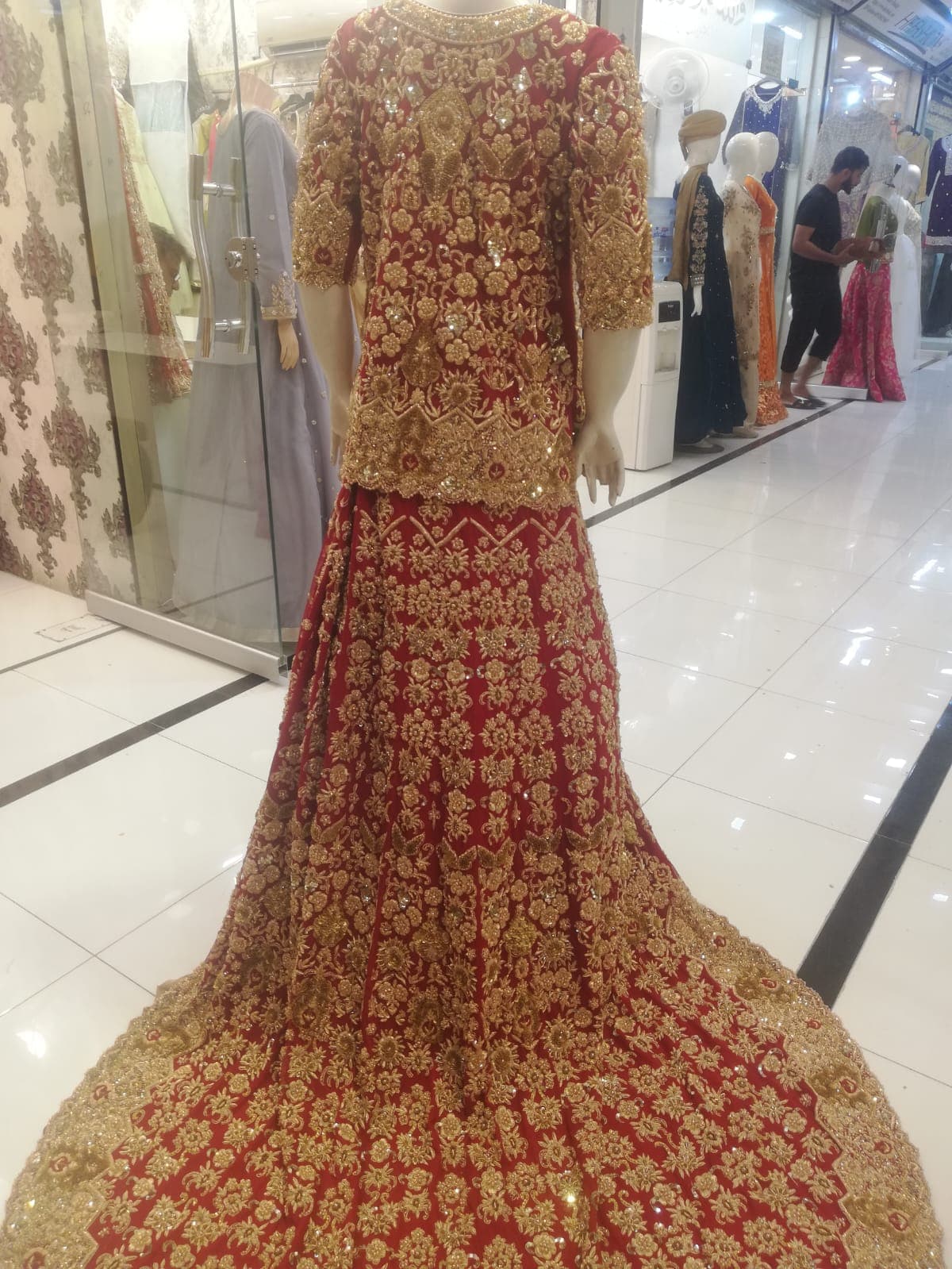
A bridal lehenga in oxblood velvet, finished with antique-gold dabka, has not meaningfully changed in shape since the late nineteenth century. The cut is shorter at the waist and longer at the hem than it was a hundred years ago, but the silhouette — fitted choli, dropped lehenga, weighted dupatta — is the same. Some objects are stable across generations. The bride changes; the colour stays.